

Iran News: Islamic Political Realities
Iran News is important for understanding the political and religious structure of the Islamic Republic of Iran. However, Iran cannot be understood through military headlines alone. Its political system has deep roots in Islamic thought, the 1979 Revolution, Persian history, national identity, and modern security concerns.
Therefore, a useful analysis must look at several parts of Iranian life together. These include the role of Islam, the Supreme Leader, elected institutions, the Islamic Revolutionary Guard Corps, political factions, the economy, foreign policy, regional relationships, and public life.
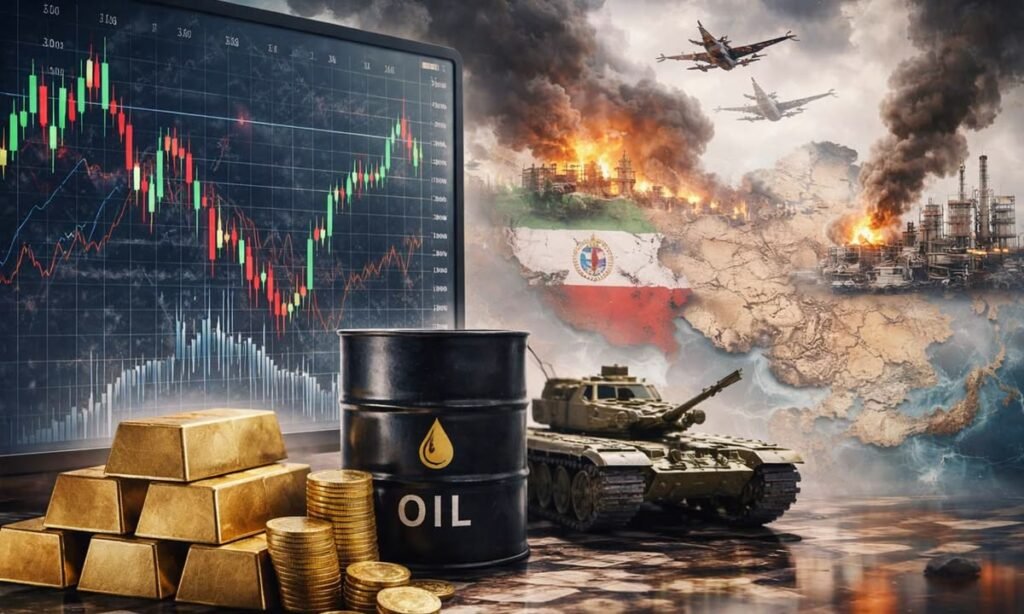
Iran News: Understanding Iran’s Islamic Republic
The Islamic Republic of Iran was established after the 1979 Revolution.
The revolution removed the monarchy led by Mohammad Reza Shah Pahlavi and created a new political system.
The new state combined republican institutions with Islamic political authority.
Therefore, Iran’s official name itself reflects this combination: the Islamic Republic.
Islam and Republican Institutions
Iran has a president.
It has a parliament, known as the Islamic Consultative Assembly.
It holds elections.
It has political parties and competing factions.
However, the system also includes institutions whose authority comes from the Islamic constitutional structure rather than ordinary elections.
The Supreme Leader holds the highest political and religious authority in the system.
The Guardian Council reviews candidates and legislation.
Therefore, Iran’s political structure is different from both a traditional monarchy and a fully liberal parliamentary democracy.
Iran News: The Islamic Foundation of the Political System
One of the most important ideas behind Iran’s political system is Velayat-e Faqih, often translated as “Guardianship of the Islamic Jurist.”
The concept became central to the political system developed by Ayatollah Ruhollah Khomeini.
What Does Velayat-e Faqih Mean?
In simple terms, the concept gives a qualified Islamic jurist a major leadership role during the period when the Twelfth Imam is believed by Twelver Shia Muslims to be in occultation.
This idea is particularly associated with Twelver Shia political thought.
However, Muslims should understand that this is not a universal Islamic political model accepted by all Muslims.
Sunni and Shia scholars have developed different ideas about political authority, governance, consultation, and the relationship between religion and government.
Therefore, the Iranian model should be understood within its specific Twelver Shia intellectual tradition.
Iran News: The Supreme Leader
The Supreme Leader is the most powerful political authority in Iran.
The position is currently held by Ayatollah Ali Khamenei, who succeeded Ayatollah Khomeini in 1989.
The Supreme Leader has major authority over national security, defense, the armed forces, and broad strategic policy.
Main Powers
The Supreme Leader has authority over the armed forces.
He also appoints or influences the appointment of important officials and institutions.
Furthermore, he has significant influence over foreign policy and national security.
The Supreme Leader also appoints members of the Guardian Council directly or indirectly through the judiciary.
Therefore, the position has much greater authority than the office of president.
Why This Matters
When reading Iran News, it is important to understand that presidential statements do not always represent the final position of the Iranian state.
A president can influence economic policy and diplomacy.
However, major security decisions often involve the Supreme Leader and other powerful institutions.
This distinction helps explain why Iranian policy can appear complex or sometimes divided.
Iran News: The President of Iran
The president is the head of the executive branch.
The president manages many domestic matters and plays an important role in economic administration and foreign diplomacy.
However, the president does not control the entire political system.
Presidential Elections
Iran holds presidential elections.
Citizens vote among candidates who have been approved by the Guardian Council.
This creates an important difference from political systems in which any qualified citizen can freely run for national office.
The Guardian Council determines which candidates meet constitutional and ideological requirements.
Consequently, elections in Iran are competitive within defined political limits.
Iran News: The Islamic Consultative Assembly
Iran’s parliament is called the Islamic Consultative Assembly, or Majlis.
Members are elected by voters.
The parliament debates laws, approves budgets, and examines government performance.
However, parliamentary power has constitutional limits.
The Guardian Council and Parliament
Legislation passed by parliament is reviewed by the Guardian Council.
The council checks whether laws are compatible with the Constitution and Islamic principles.
Therefore, parliament does not have the final word on every law.
If the Guardian Council rejects legislation and the disagreement continues, the Expediency Discernment Council can become involved.
This system creates several layers of political review.
Iran News: The Guardian Council
The Guardian Council is one of the most important institutions in Iran.
It has twelve members.
Six Islamic jurists are appointed by the Supreme Leader.
Six legal experts are nominated by the head of the judiciary and approved by parliament.
Reviewing Laws
The council examines legislation passed by parliament.
It checks whether laws conflict with the Constitution or Islamic principles as interpreted within the Iranian system.
Reviewing Candidates
The council also plays a major role in elections.
It reviews candidates for important offices.
This process is known as candidate vetting.
Supporters argue that it protects the Islamic and constitutional character of the state.
Critics argue that it limits political competition.
Therefore, the council remains one of the most debated parts of Iranian politics.
Iran News: The Judiciary
Iran has a formal judicial system.
The head of the judiciary is appointed by the Supreme Leader.
The judiciary operates under Iranian law, which includes legislation influenced by Islamic jurisprudence.
Islamic Law and Iranian Law
It is important to understand that Islamic law is not applied in exactly the same way in every Muslim country.
Different schools of Islamic jurisprudence have different methods and interpretations.
Iran’s legal system is strongly influenced by Twelver Shia jurisprudence.
Therefore, Iranian law should be studied within that particular legal tradition.
Iran News: The Islamic Revolutionary Guard Corps
The Islamic Revolutionary Guard Corps, commonly known as the IRGC, is one of Iran’s most powerful institutions.
It was created after the 1979 Revolution.
Its original purpose included protecting the Islamic Republic from threats to the revolutionary system.
Over time, its role expanded.
Military Role
The IRGC has major military capabilities.
It operates alongside Iran’s regular armed forces.
The IRGC also oversees the Quds Force, which focuses on operations and relationships outside Iran.
Political Influence
The IRGC also has economic and political influence.
Its influence has grown through its involvement in national security, infrastructure, business, and regional affairs.
Consequently, it is difficult to understand Iranian power without understanding the IRGC.
Iran News: Iran’s Political Factions
Iranian politics includes different political tendencies.
These groups are often described using terms such as conservatives, principlists, reformists, moderates, and hardliners.
However, these labels can be too simple.
Conservative and Principlist Groups
These groups generally emphasize the Islamic character of the state, national sovereignty, resistance to Western pressure, and strong security policies.
They often support the authority of the Supreme Leader and revolutionary institutions.
Reformist Groups
Reformists have generally sought greater political openness, stronger civil institutions, and improved relations with parts of the international community.
However, reformist politicians still operate within the Islamic Republic’s constitutional framework.
Why Factions Matter
Political factions can disagree over economic policy, foreign relations, social rules, and the level of engagement with Western countries.
Yet they can also share important national goals.
Therefore, Iran should not be described as a state with only one political opinion.
Iran News: Elections and Political Participation
Elections are an important part of Iranian political life.
Millions of Iranians participate in presidential, parliamentary, local, and other elections.
However, candidate restrictions mean that the range of political choices is limited.
Supporters’ View
Supporters of the system argue that elections provide public participation while protecting the Islamic character of the state.
They also point to the country’s constitutional institutions as safeguards against policies they believe could weaken the Islamic Republic.
Critics’ View
Critics argue that candidate vetting can exclude important political voices.
They also raise concerns about political freedom, civil rights, and the treatment of opposition movements.
Therefore, discussions of Iranian elections often involve two competing views: participation within an Islamic constitutional framework and criticism of the limits placed on that participation.
Islamic Concepts in Iranian Politics
Several Islamic concepts are important when examining Iran’s political system.
Shura
Shura means consultation.
The Quran says:
“And those who have responded to their lord and established prayer and whose affair is consultation among themselves…”
— Quran 42:38
Consultation is therefore an important Islamic political principle.
However, Islamic scholars differ about exactly how shura should be organized in a modern state.
Justice
Justice is another major Islamic principle.
The Quran says:
“Indeed, Allah commands justice and excellence…”
— Quran 16:90
This principle is relevant to government, courts, economic policy, and treatment of citizens.
Trust and Responsibility
Islam also emphasizes responsibility.
Political authority can therefore be viewed as a trust rather than simply a source of personal power.
This idea appears in Islamic teachings about leadership, justice, and accountability.
Islamic Authenticity and Political Interpretation
When discussing “Islamic politics,” it is important to separate established religious teachings from political interpretations.
The Quran and authentic Sunnah provide core principles.
However, political systems developed by Muslim governments are human institutions.
They can therefore be debated and criticized.
Iran News: Quran and Sunnah
The Quran is the primary source of Islamic belief.
The Sunnah of Prophet Muhammad, peace and blessings be upon him, is also central to Islamic understanding.
For Muslims, authentic hadith are important sources for understanding the Prophet’s teachings and practice.
However, political systems should not automatically be treated as identical to Islam itself.
Conclusion
Iran News provides an important window into one of the Middle East’s most complex political systems. Iran combines Islamic principles, republican institutions, revolutionary history, national identity, military power, and regional strategy.
Islamic principles such as justice, consultation, accountability, protection of life, and verification of information provide valuable standards for political discussion. At the same time, political institutions remain human creations and can be evaluated through evidence and reason.
About The Author
